I’m thrilled to be exhibiting as a represented artist with MESSUMS ORG, launching as part of Messums Editions and the curated hang at the 10th Woolwich Contemporary Print Fair 13-16 November ✨
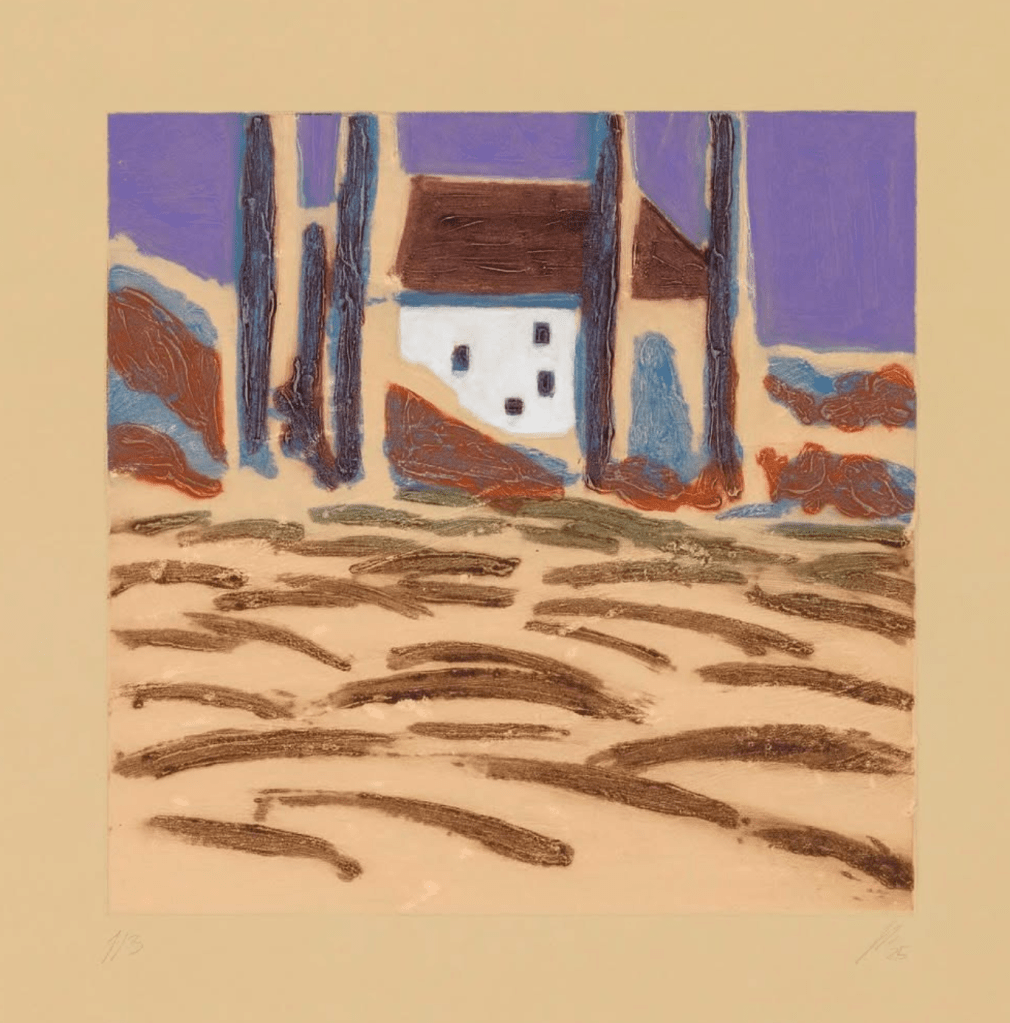
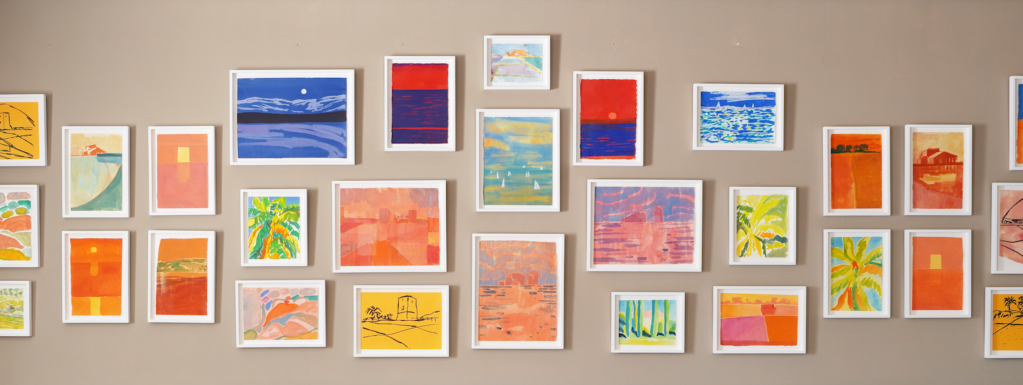
Messums Editions is a new print line championing accessible, limited-edition works by both emerging and established artists. At the fair, you’ll find a selection of my hand-painted carborundum prints, editioned by Andrew Smith and featured in my solo show Terre senz’ombra.
The title for the show offers context to these works on paper by Francesco Poiana. It is a phrase used to describe a state of openness, a land where truth abounds because there are no shadows in which falsity can hide. It is also taken as the title to a 2015 publication by Anna Ottani Cavina professor of History of Art at the University of Bologna, in which she charts the indelible reaction to the light and colours of Italy by those 17th-19th European artists who travelled South. There is a fundamental honesty in making marks on paper – interpreting the world as one sees it through the construction of images from raw shape and colour. Francesco Poiana’s work is a joyous and playful interaction with landscape across multiple mediums, communicating lived experience through emotional responses to colour. Poiana’s life and work unfold between places of cultural crossing. Born and raised in a borderland between Italy and Slovenia – where languages, traditions and terrains intertwine – he now lives and works in London, continuing his exploration of identity and place through drawing, painting, and printmaking. Not wedded to any one strict method, his work is instead a series of explorations representing moments of curiosity and shifting attachments to technique.
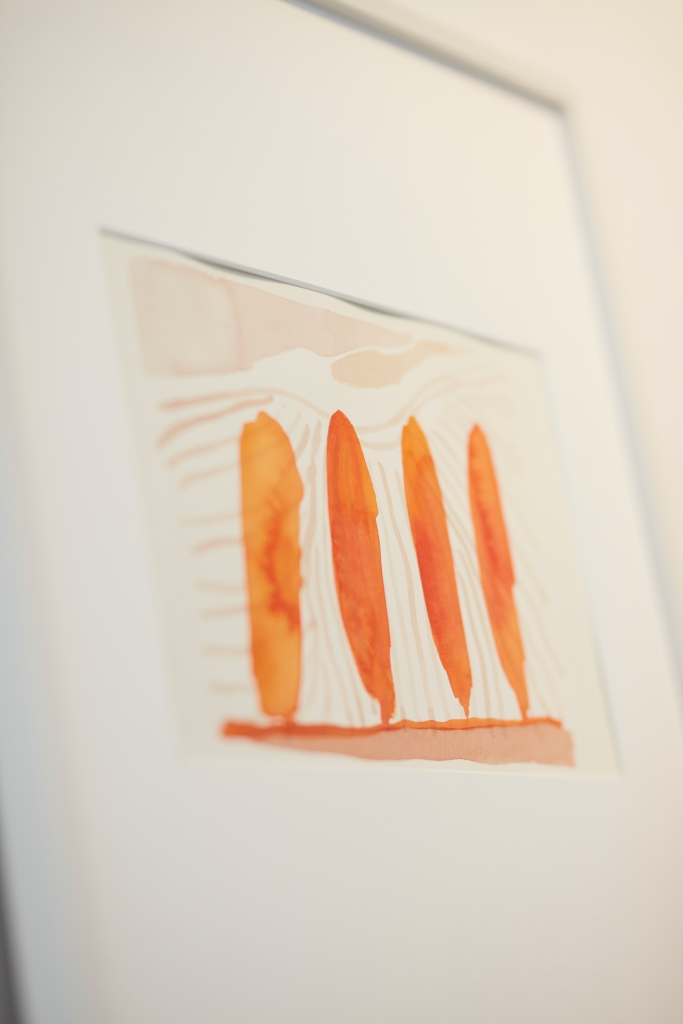
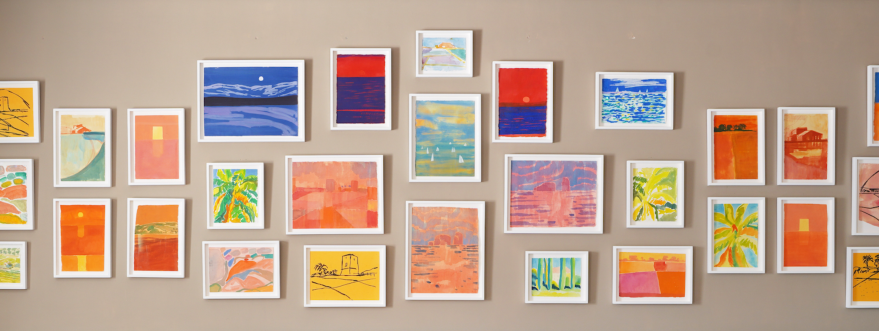
Central to this exhibition is a new series of carborundum prints – a medium that allows Poiana to combine texture, depth, and colour in a tactile, almost sculptural way. These limited-edition prints, along with several one-off pieces, such as the monotypes and watercolours, are often retouched and hand-painted, inhabiting a ‘terra di mezzo’ – a middle land – that escapes the constraints of any singular technique. These works extend his dialogue with material and light, offering fresh territory to explore how form and atmosphere emerge through layering and textural surface effects. For Poiana, mark making remains a foundational daily source of physical pleasure and discovery. It is a form of play and meditation, where focused attention and surrender to chance coexist.
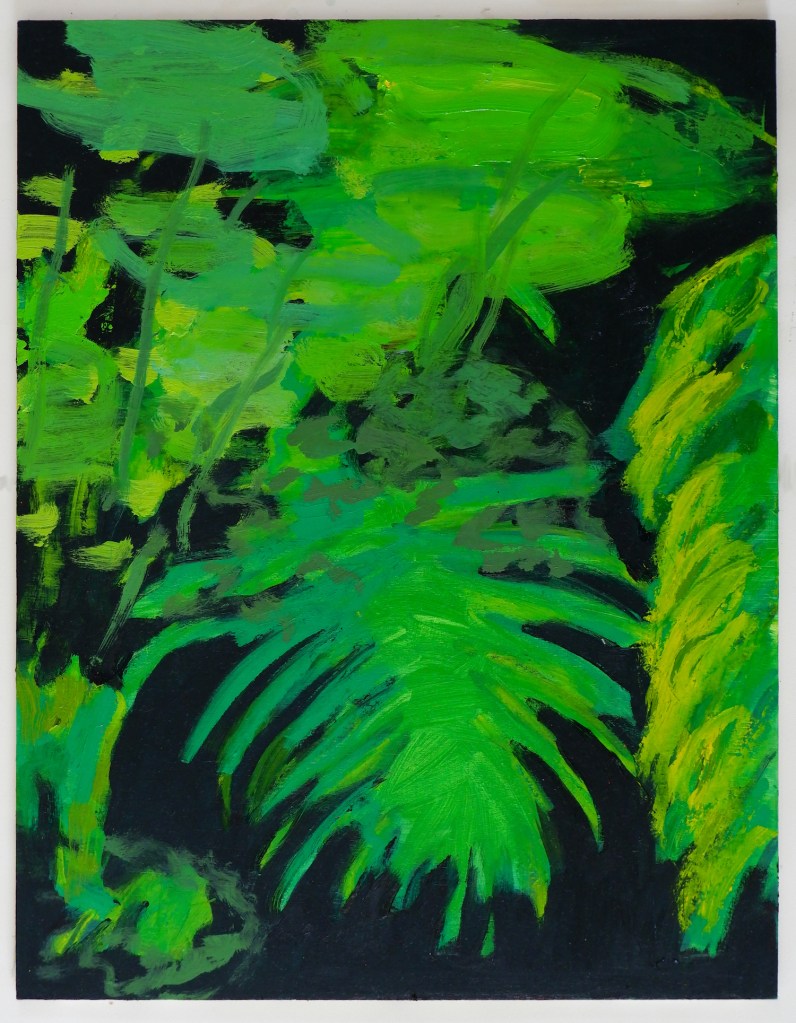
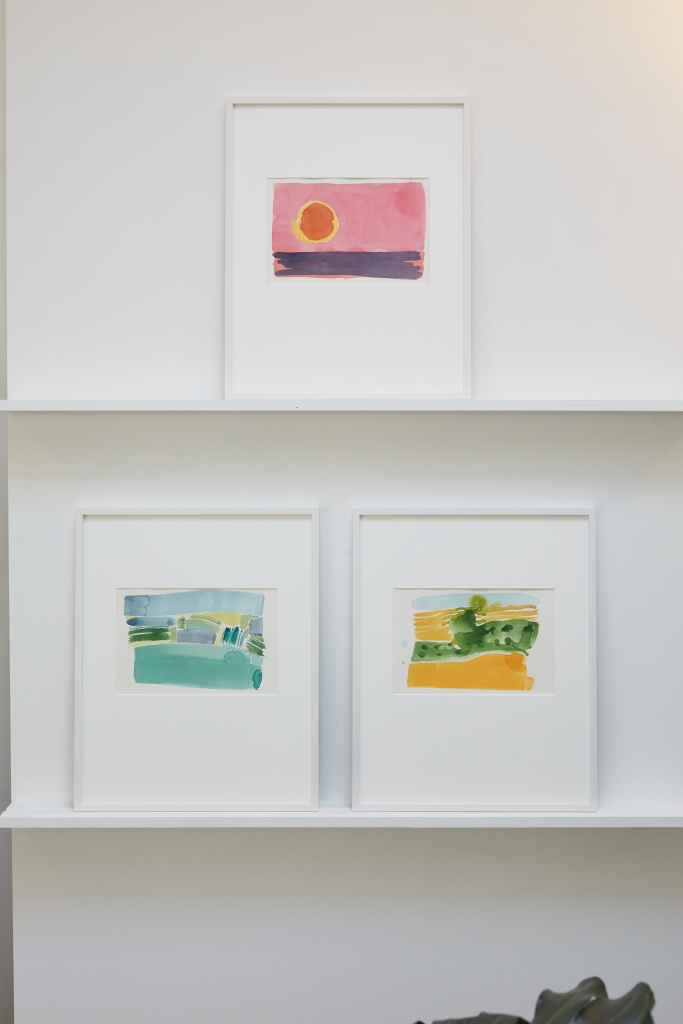
In Terre senz’ombra, Poiana finds a focal point in light – specifically the period of fleeting illumination in the fragile intersection between night and day – considering the beauty and physicality of form created by the meeting of colours. The works are an explosion of exuberant, contrasting, almost Fauvist colour that define the landscape and eliminate darkness. Terre senz’ombra is not a fixed geography, but a shifting threshold – a celebration of what flickers and escapes yet leaves a trace – these are not literal landscapes, but emotional and sensorial terrains shaped by perception, intuition and memory. At times, the images seem to slip beyond representation, moving towards the abstract realm of the sublime; an invitation to pause and enter a liminal space. Poiana’s works unfold gently, asking for attention without demanding it, allowing themselves to be discovered rather than explained.
This group exhibition at Messums London presents a collection of works that display a remarkable variety of approaches to monotyping, ranging in size, subject matter and practice, as well as showcasing the individual creative language of each of the artists in the exhibition, bringing together an exciting group of contemporary artists whose diverse practices are linked by their exploration of this medium.
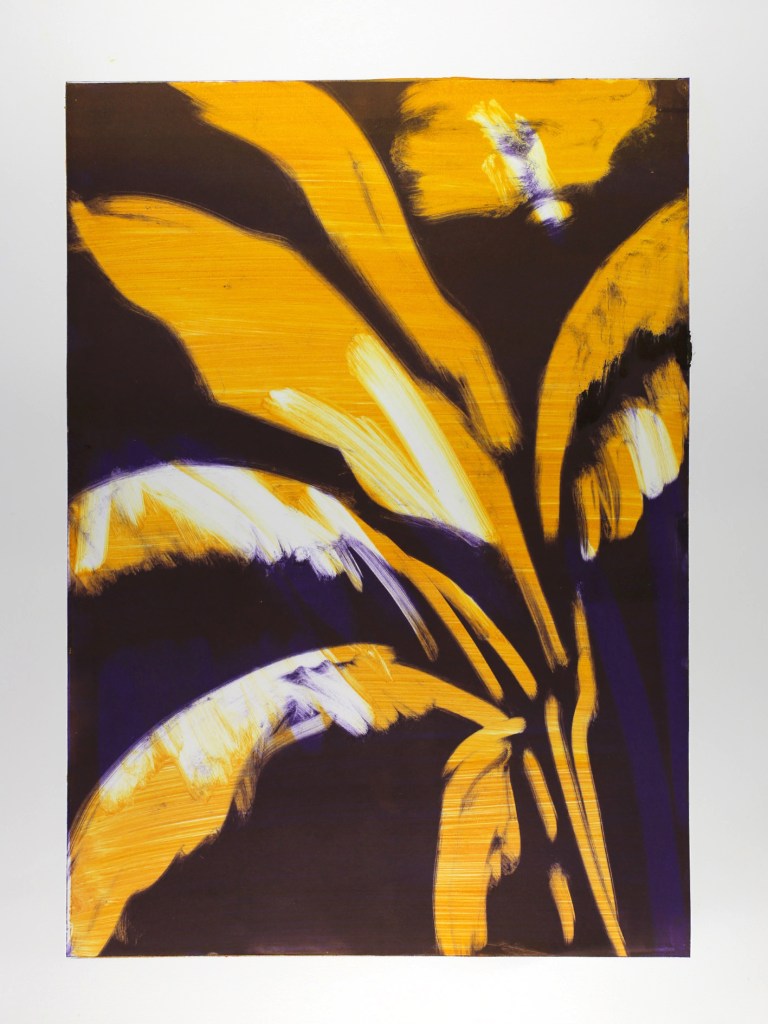
Monotypes are created by marking a polished surface with ink or paint and then transferring the reversed image onto a support by applying pressure. As the name suggests, the resulting artwork is unique – the process destroying the initial image. A curious hybrid of painting, drawing and printmaking, monotypes are one of the earliest forms of art making. The neolithic handprints on the walls of caves are technically monotypes; but it wasn’t until the Renaissance that monotyping became prevalent in Western art – famously being practised by artists such as Rembrandt van Rijn, William Blake, Edgar Degas, Henri Matisse and Pablo Picasso. The hybrid nature of the monotype breaks traditional medium boundaries, opening up a broad spectrum of actions, inviting experimentation and spontaneity. While many monotypes are monochrome, artists often use the process as a graphic alternative to painting, layering colour and adding fine detail. The flat polished surface allows for creative exploration of textural mark-making through the use of fabrics, solvents and tools to work into the image. Artists can manipulate areas to create highlights in the final image, in much the same way one might use an eraser when working in graphite.
As part of an ongoing interest in exploring making practices, Messums London will present a series of works by contemporary artists who are delving into the exciting possibilities of this hugely versatile, and eminently accessible medium. The curation covers a broad range of stylistic and technical approaches to monotyping, and seeks to introduce collectors to monotypes as a means of acquiring original works of art by established artists at much lower price points than their work would otherwise hold.
Messums London is thrilled to announce an upcoming group exhibition at Cork Street Gallery which considers the individual and collective response to environment as represented in landscape painting today. This exhibition delves into the dynamic realm of contemporary painting through the lens of artists who reimagine and experience the natural world through their practices. Landscapes are a potent medium for exploring the intricate symbiotic relationship we have with nature and how, through painting, our perspectives can change to reflect this.
Our curatorial approach aims to draw together perceptions of landscape through the eyes of artists who experience, observe, and appreciate it, demonstrating how understanding through observation can lead to different value systems of perceived beauty. The deeper purpose to not only reflect this beauty but to invite the viewer to reconsider their own interactions with the environment. With a range of art forms that address everything from ecological issues to envisioning harmonious coexistence, the exhibition underscores art’s vital role in fostering awareness and inspiring change in our engagement in the world around us.
The selection process was based on a range of criteria rather than individual merit to look at the conversation in deeper context with critical thinking to explore how landscape and our collective wellbeing mirror each other. Above all considering the entwined nature of our relationship with the environment celebrated through the marks we make. With a spirit of resilience, we echo Pablo Neruda’s sentiment: “You can cut all the flowers, but you can’t keep spring from coming.” This exhibition celebrates the green force that flows through us all while recognizing the consequences that can occur when we make wrong assumptions about nature.
The exhibition started with a quote in Gabrielle Rifkind’s book ‘The Fog of Peace’ which starts:
“We are most likely to understand more about the smell of politics and human behaviour if we start at the kitchen table, and, according to Hans Blix, the wise ex-head of the International Atomic Energy Agency, peaceful relations between states ‘can and must be practiced both at the conference table and the kitchen table”.
We hope that in supporting this exhibition you will not only find wonderful works of art to enjoy and also to use, but know that your purchase is supporting these charities in their progress of supporting others in areas of conflict.
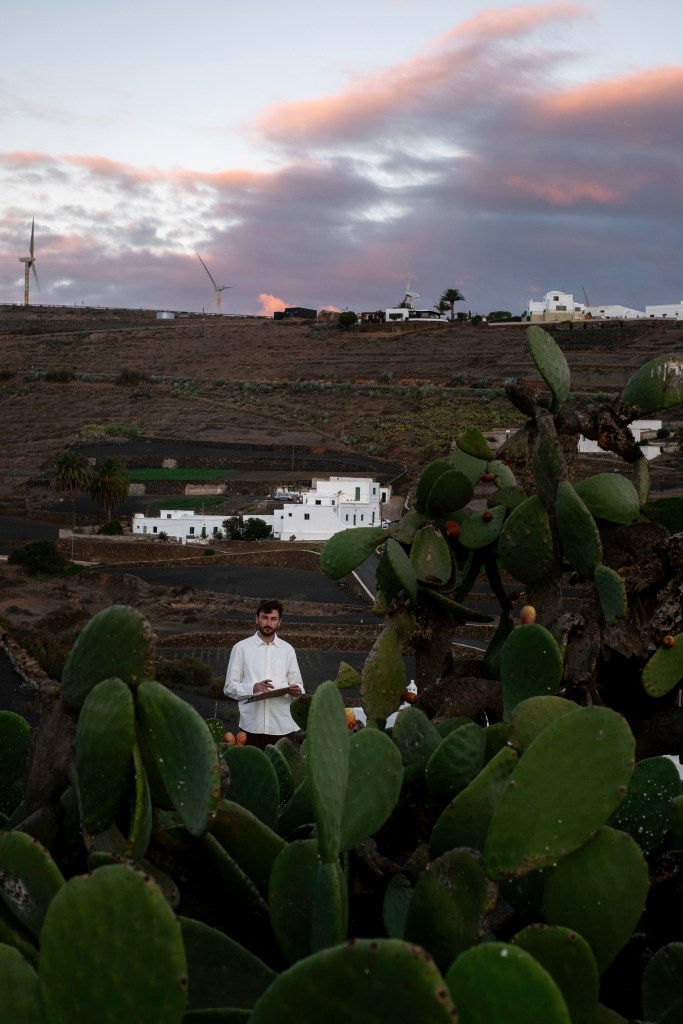
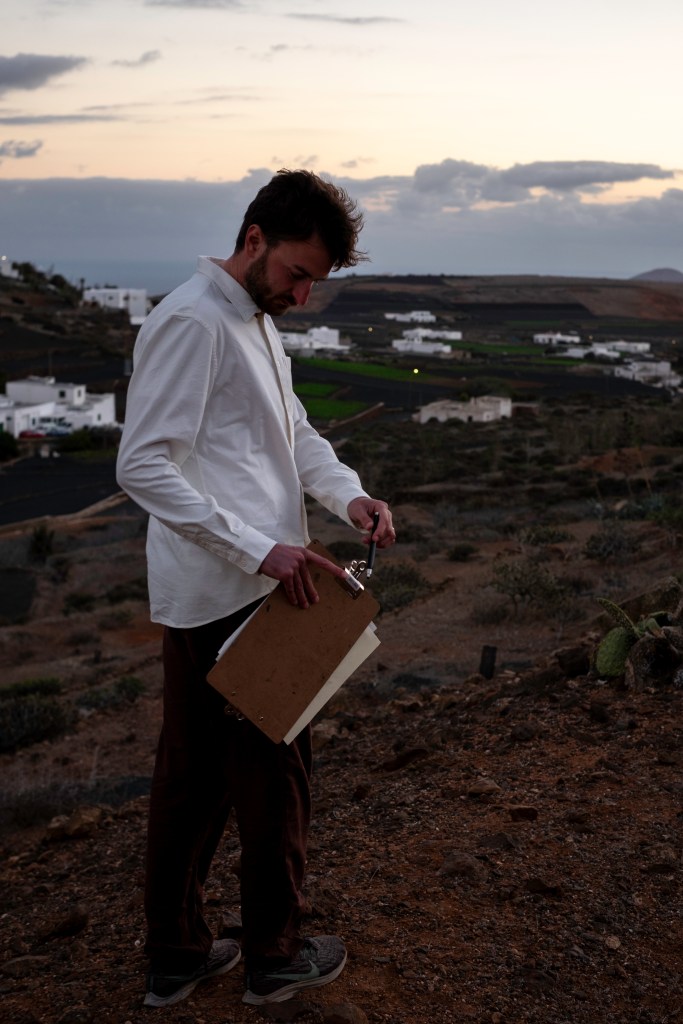
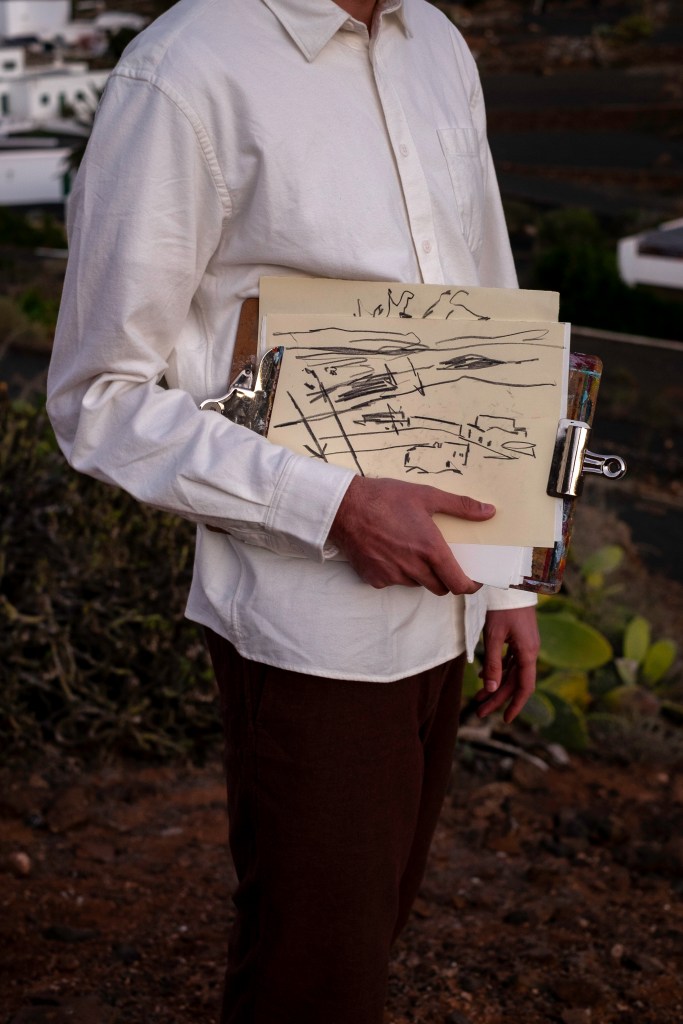
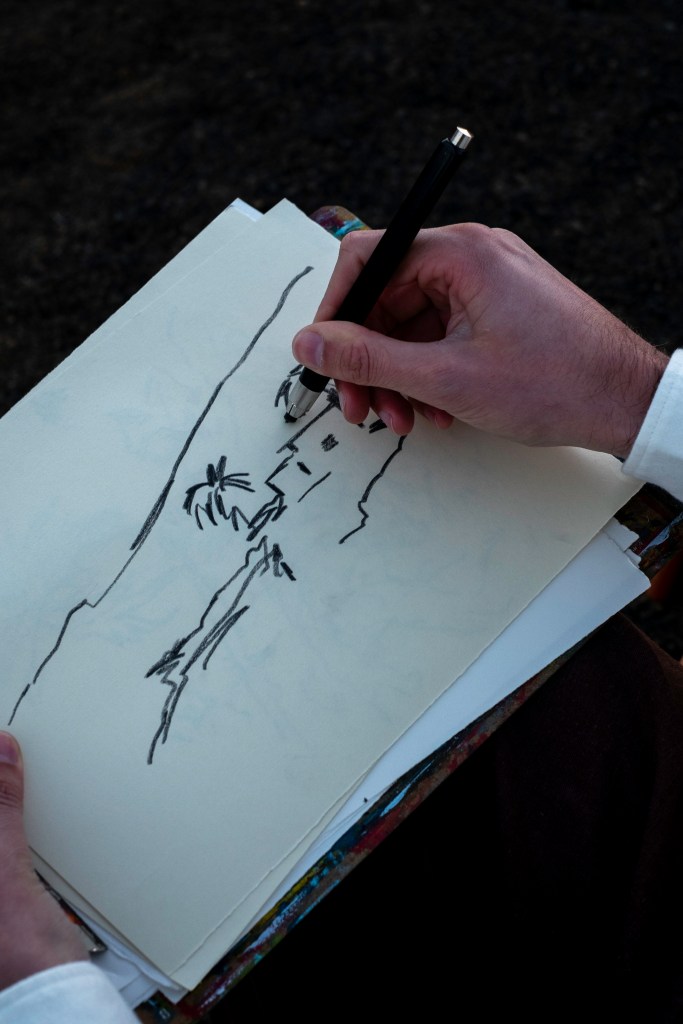
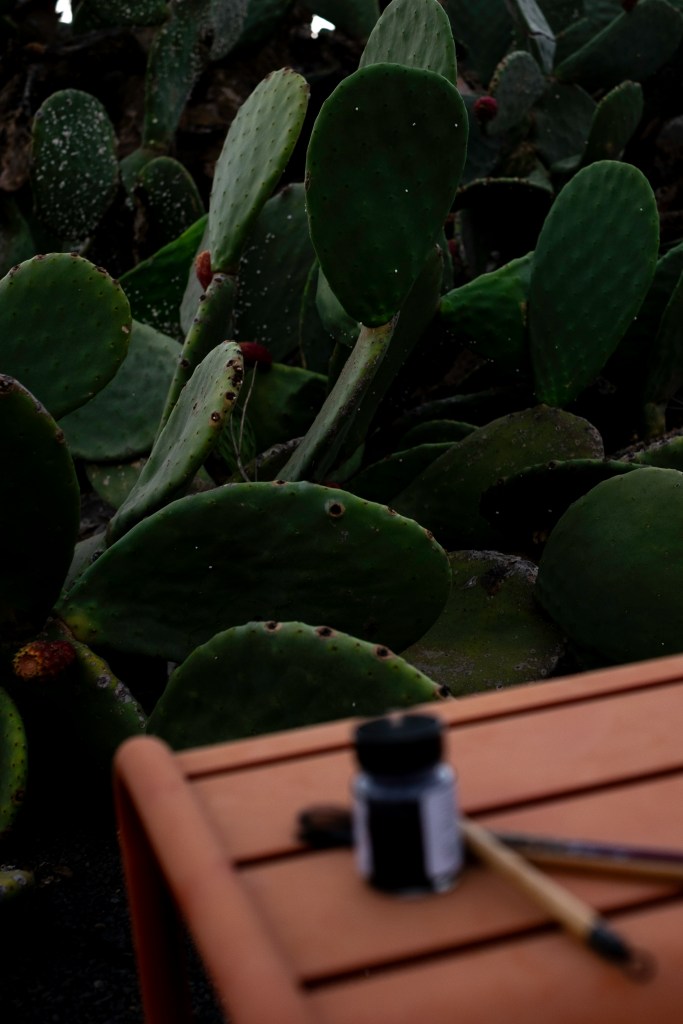
During the month of December I was a guest of Hektor, a farmhouse that hosts artists in residence on the incredible island of Lanzarote in the Canary Islands. In this time I had the opportunity to observe the vulcanic landscapes of the island and immerse myself in them through observational drawing.
In recent years, I have developed a series that I called ‘Terra di Dio’ after the Rossellini’s masterpiece.
These images are guiding me to conduct a visual research on volcanic islands that for me have always been an idyllic symbol of curiosity and mystery.
Like in Tarkovsky’s “Zone” the landscapes here are taking the shape of a psychological site, every place is real and fantastic at the same time. This is the point at which psychology and geography collide. These are territories of communication with the subsoil , a Dante’s otherworldly dimension that invites us to pass beyond the bounds of our own, established and thus-far limited self, to understand ourselves as, like the land, always in flux, ever in process, elemental and eruptive, ancient and renewed, splitting and spilling only to reform.
These works on paper are fragments of landscapes made of light and coarse salt, a point of view on the landscape that evokes the gaze of an eighteenth-century traveller; to return to know how to look at that landscape enjoying its richness.
During the last year I have deepened the research on the Mediterranean landscape, especially I stopped for a long time in the salt pans in western Sicily. The salt is extracted from the salt pans by evaporating the sea water and the salt by precipitation remains on the ground where it is then collected by machines or by hand by workers.
The process of salt production is a metaphor for the artistic process of inner synthesis of shapes and colours. Like a hunter gatherer again here the painter is harvesting the fruits that the landscape can offer.
These works of pure projection are transformed into an archetype of original landscape, individual that has as reference the outside world but that then in the mental space of the studio crystalizes and is then collected.
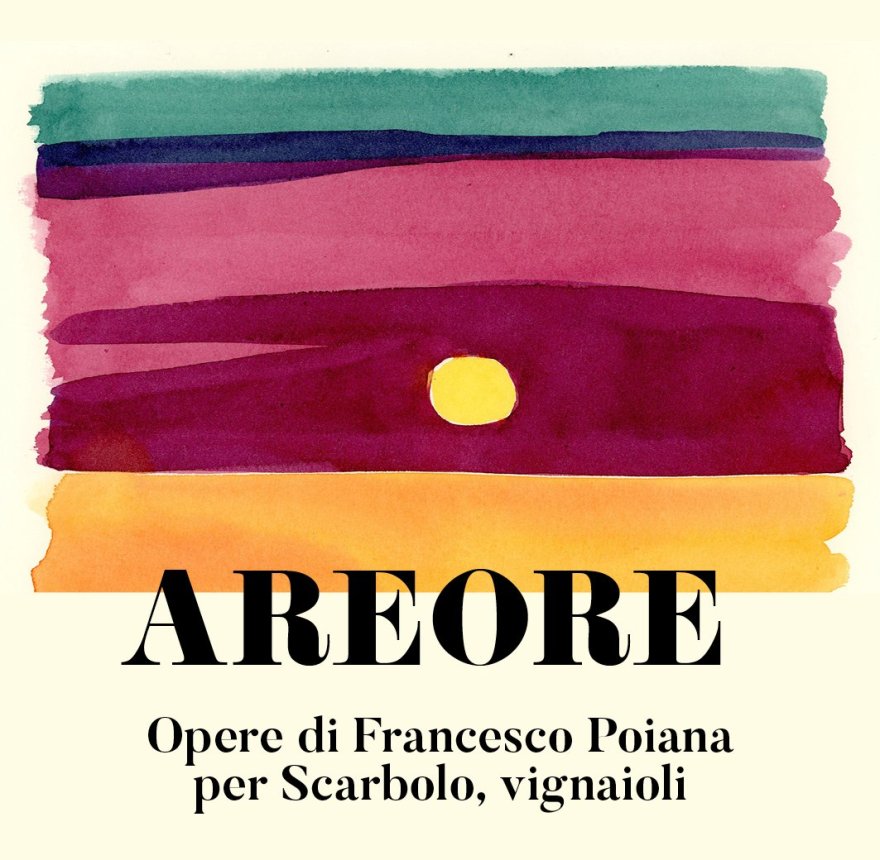
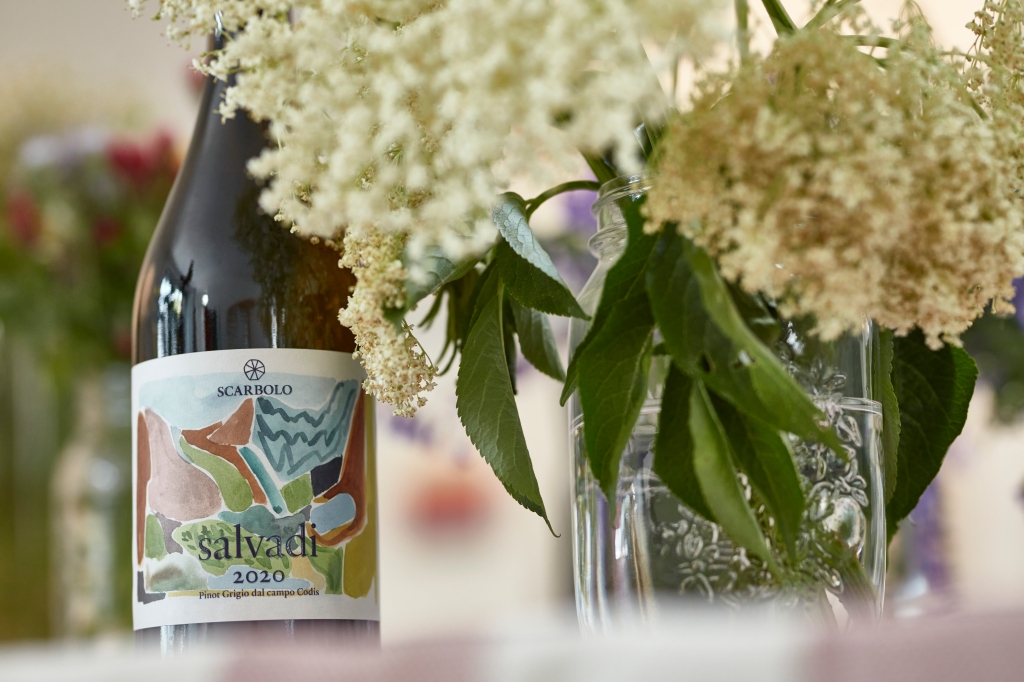
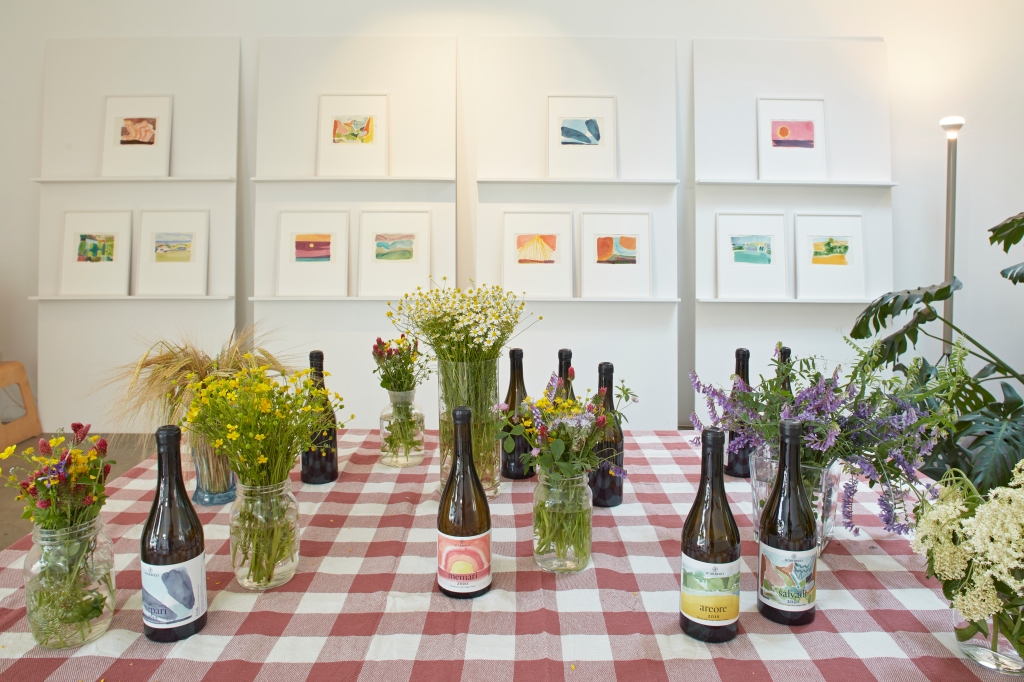
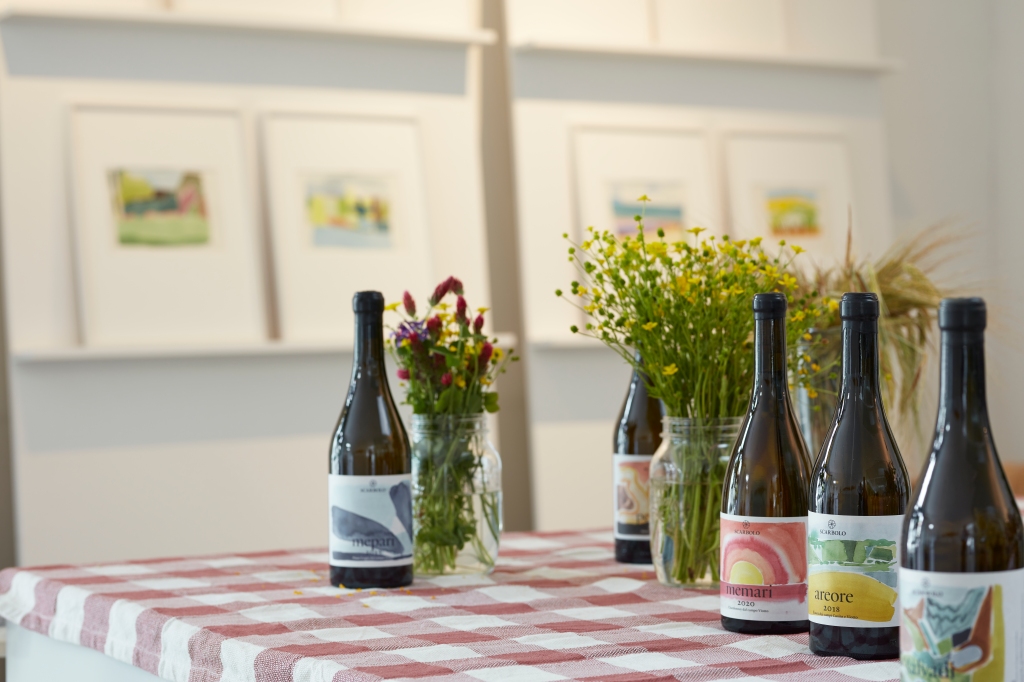
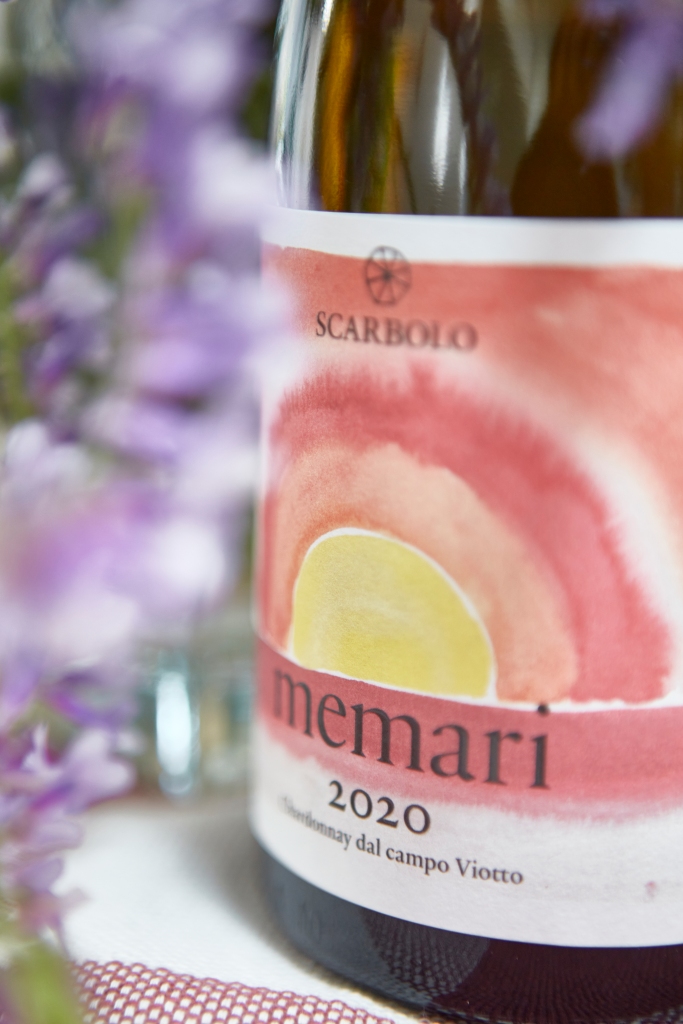
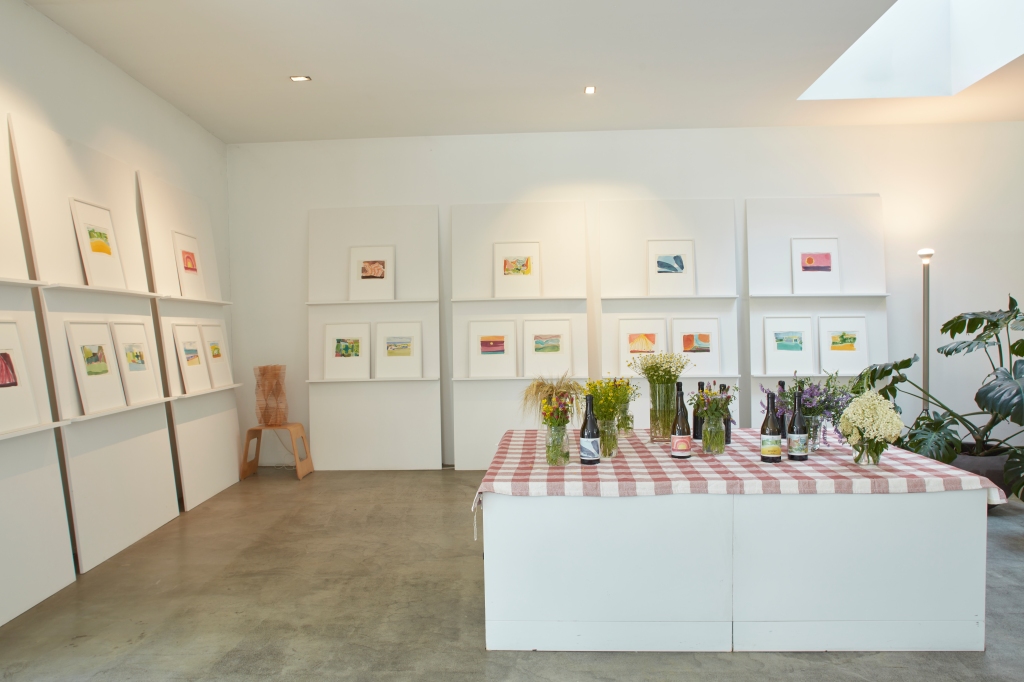
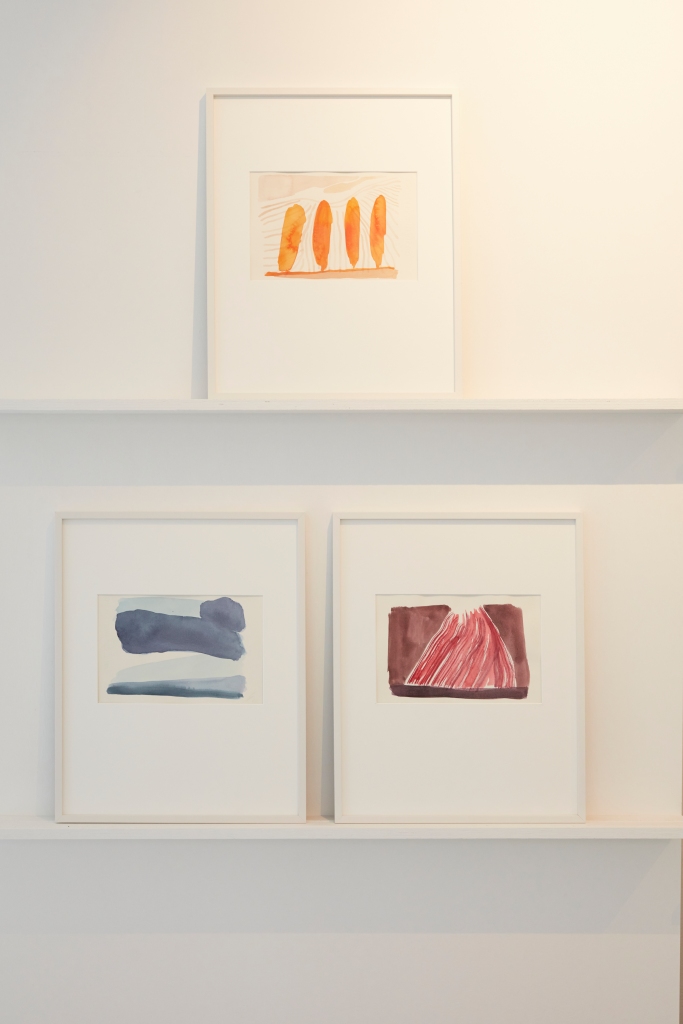
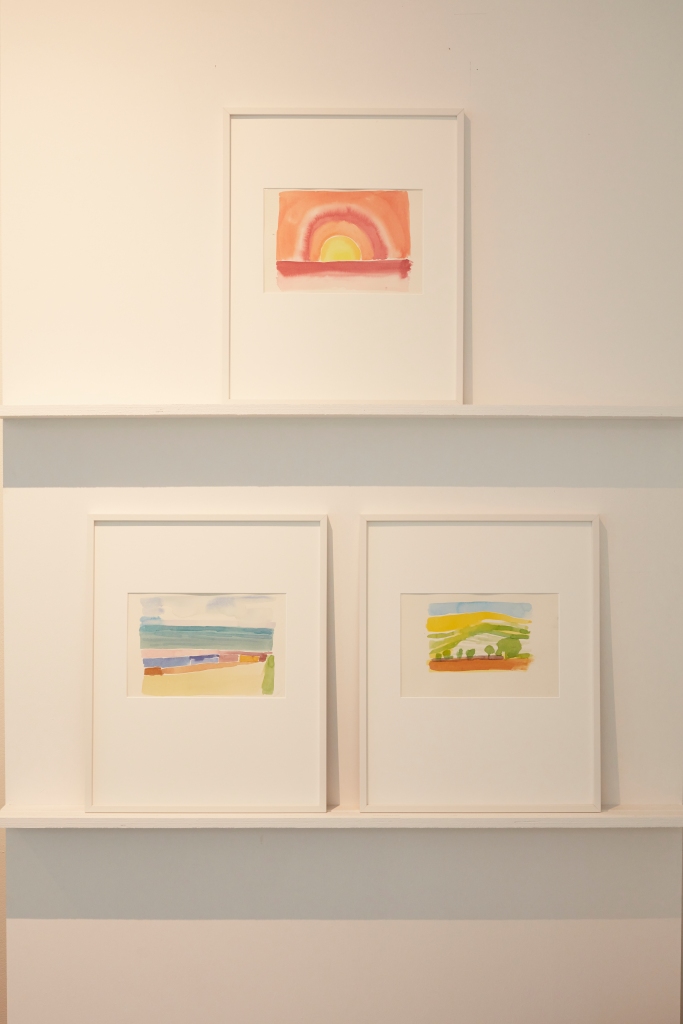
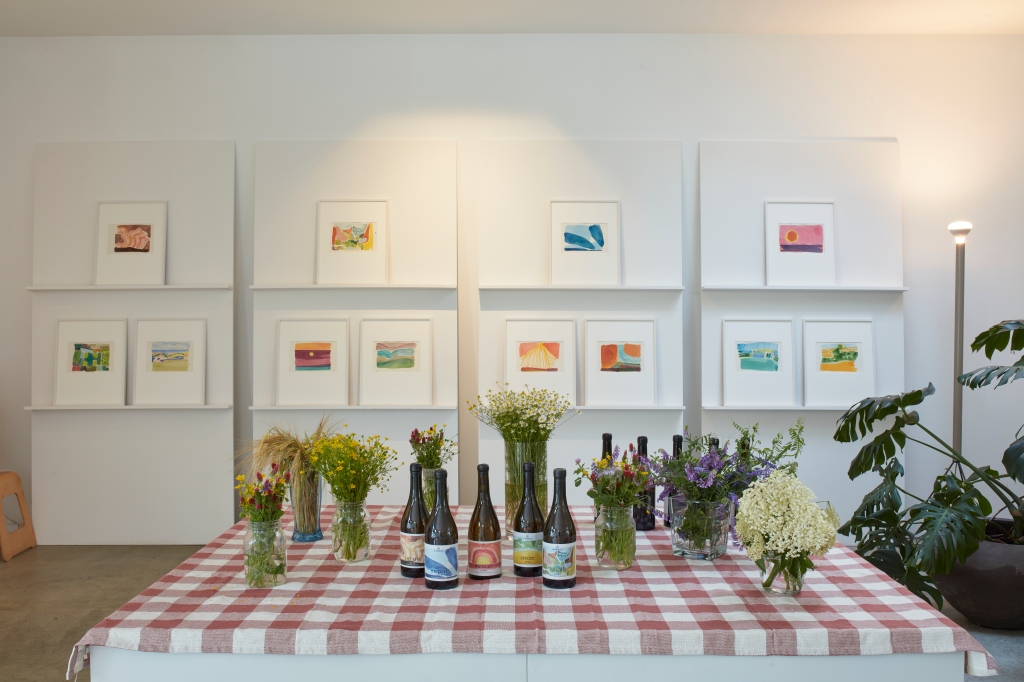
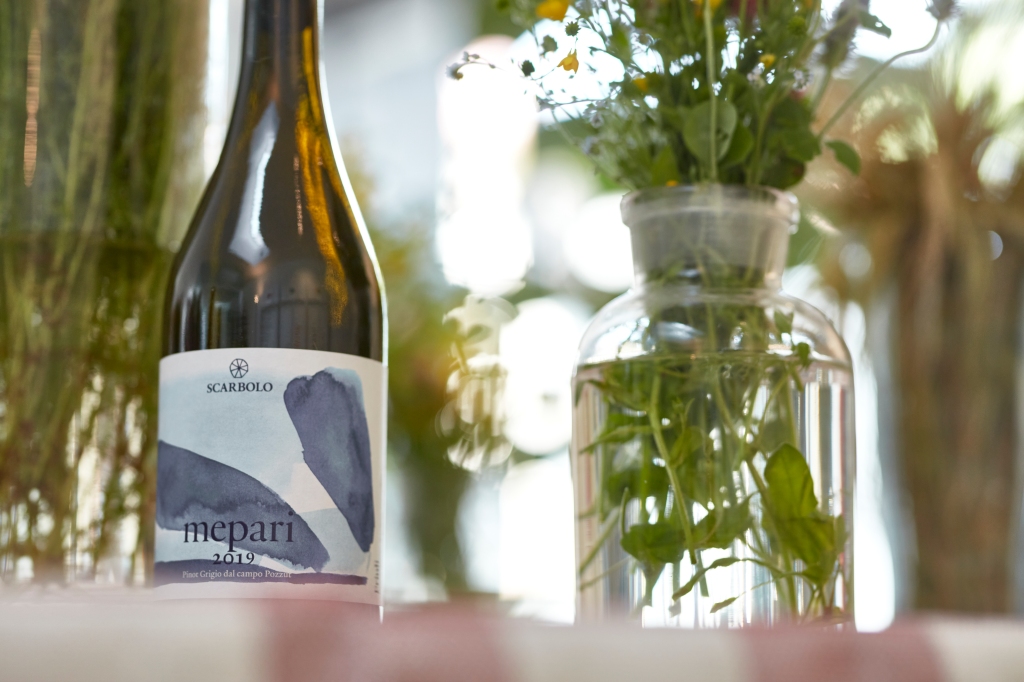
Arcipèlago is happy to present a new exhibition of works on paper. A collection of twenty-two watercolors specifically realized for the Italian winemaker @scarbolo_grave for their new bottle’s labels, in collaboration with the studio Designwork. Scarbolo is based in the region of Friuli in North East of Italy. With their work, they wish to share the most authentic character of their lands, in all its forms. Therefore, they invited me to create the watercolors reproduced on each bottle. This series of artworks on paper can be seen as a return to the origins, to the simple beauty of a landscape that keeps in itself so many myths, lights, and tones. A resistance to civilization and domestication. A metaphor for how wine gradually reveals, step by step, its complex character, hinting at its most indomitable spirit. As the title “Areore” evokes — a jubilant cry of the traveler who after a long trip abroad returns home and is served with good wine — this exhibition is a colorful and joyful celebration of the drink of Gods and of those who create it.
“These works on paper are fragments of landscapes made of light and coarse salt, a point of view on the landscape that evokes the gaze of an eighteenth-century traveller; to return to know how to look at that landscape enjoying its richness.
During the last year I have deepened the research on the Mediterranean landscape, especially I stopped for a long time in the salt pans in western Sicily. The salt is extracted from the salt pans by evaporating the sea water and the salt by precipitation remains on the ground where it is then collected by machines or by hand by workers.
The process of salt production is a metaphor for the artistic process of inner synthesis of shapes and colours. Like a hunter gatherer again here the painter is harvesting the fruits that the landscape can offer.
These works of pure projection are transformed into an archetype of original landscape, individual that has as reference the outside world but that then in the mental space of the studio crystalizes and is then collected.”

 Francesco Poiana